What’s zero-click for higher ed?
What do you think about zero-click content? How would this look in the American higher ed landscape?
I love zero-click content. I’m thrilled it’s catching on.
At its core, it’s simple. Don’t make your audience click to get value from you.
In marketing, we do the opposite of this all the time.
The print piece that’s just a list of URLs.
The gimmicky subject line that doesn’t say what’s in the email.
The social post that wants you to go over to a blog.
When we chase conversions, we optimize for them, and we stop serving our audiences. Zero-click flips that.
Zero-click is about delivering value where they are.
Let’s apply zero-click to common higher ed scenarios.
On social: Reveal the point. Share the insight. Instead of “Students share 5 key tips for finals season on our blog, link in bio!” Let the carousel, caption or video be the actual 5 tips.
In email: 1) Your subject line needs to be a summary of your email, not a tease. 2) Your email body needs to be the actual content, not just a link to it.
In print: Print is underrated. It’s one of the few moments where someone is holding your message with no tabs, notifications, or pings! Use that focus. Make the piece useful on its own. If your print piece only points people somewhere else, it’s just an expensive signpost.
On web: Zero-click means people find what they need in AI summaries or search snippets instead of visiting your site. Your job is to make your web content easy to summarize with clear headings and natural language, which is what you should be doing anyway.
Zero-click isn’t anti-click. It just puts the value first and makes the click optional.
But if no one clicks, how do you measure?
*Qualitative data enters the chat*
Replies, reactions, questions, forwards, the anecdotes people share. If one person took the time to respond, many more found value.
Word of caution for email. 🚨 Email providers want to see clicks. Without them, they assume the sender is spam. This newsletter is a good example of zero-click content — the value is right here, no action needed. But I still need an occasional click so these messages keep reaching you.
My husband felt deeply cheated by my poll last week, realizing I did it for the clicks and wasn’t actually tallying votes. He made me promise to share what people clicked on…even though it isn’t a perfect measure of the “votes.”
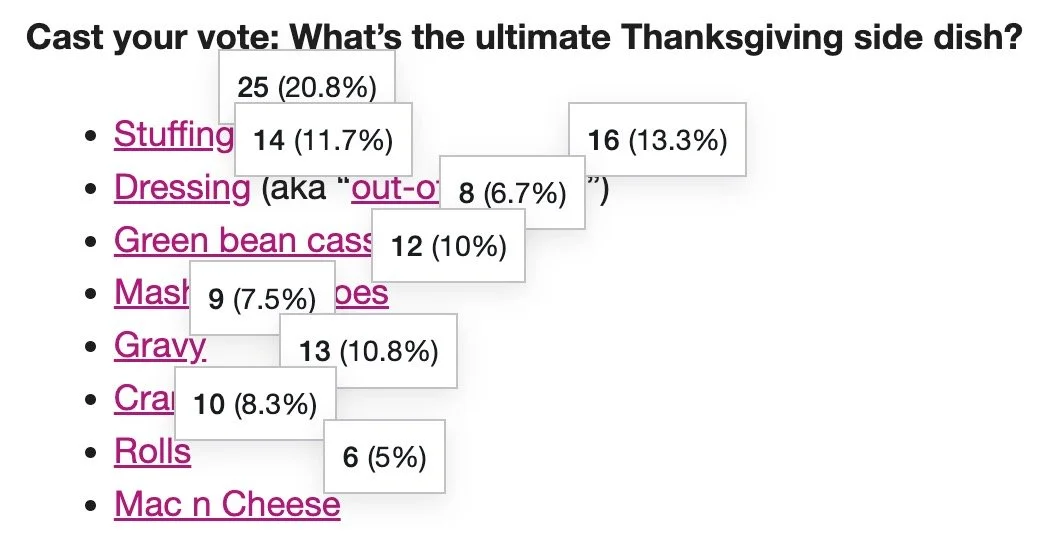
🏆 The winner is stuffing, cooked in-the-butt (👈🏻 this click is so worth it I promise).
When engagement is the goal, content drifts toward harmful 🤯
David Dylan Thomas is the first person who made me think of engagement differently and start putting value before clicks. I attended his keynote at the ContentEd Conference a few years ago. Paraphrasing, he said something like: As soon as we set metric goals, we stop doing the right things for actual humans, and start gaming for the numbers.
His latest talk, “No, Seriously, F*ck Engagement,” goes even further. Engagement metrics reward outrage, misinformation and division because they get more clicks. So when engagement becomes the goal, the algorithms prioritize what’s harmful. Oof. We can’t have that.
This post was originally sent as an email. Subscribe to my newsletter and get the newest questions and answers in your inbox.