What’s a good way to get stakeholder feedback?
How would you receive stakeholder feedback in a way that doesn’t stress everyone out? Would you use an intake form, have quarterly meetings, HOW??
When I was at Cornell, I loved my job, but the infinite writing edits nearly broke me. I came up with these steps after shedding a few too many frustration tears.
Ten years later, I still follow these principles—whether I’m asking for feedback on copy or an entire strategy.
1. Feedback is about alignment with the goal.
When you ask for feedback, remind everyone what the work is meant to accomplish. Feedback is not about personal preference or vibes.
2. Be explicit about what good feedback looks like.
Don’t leave a feedback request open-ended. Give people prompts directly tied to your goals.
Examples:
If it’s content: What’s your main takeaway after reading this?
If it’s a plan: Does this reach our priority audiences?
If it’s a strategy: Does this align with our values?
I also generally like to ask:
Did any feelings come up? What were they, and what caused them?
Is anything important missing?
3. Allow comments, not edits.
Do not let stakeholders edit your document. Especially with multiple reviewers.
Instead, share a cloud-based document with comment access only.
This works because:
People see each other’s feedback.
They can agree or disagree in real time.
You stay in control of the integrity and intent of the work.
Bonus: You can add comments too. If you know something might raise questions, address it upfront like I did in this example.
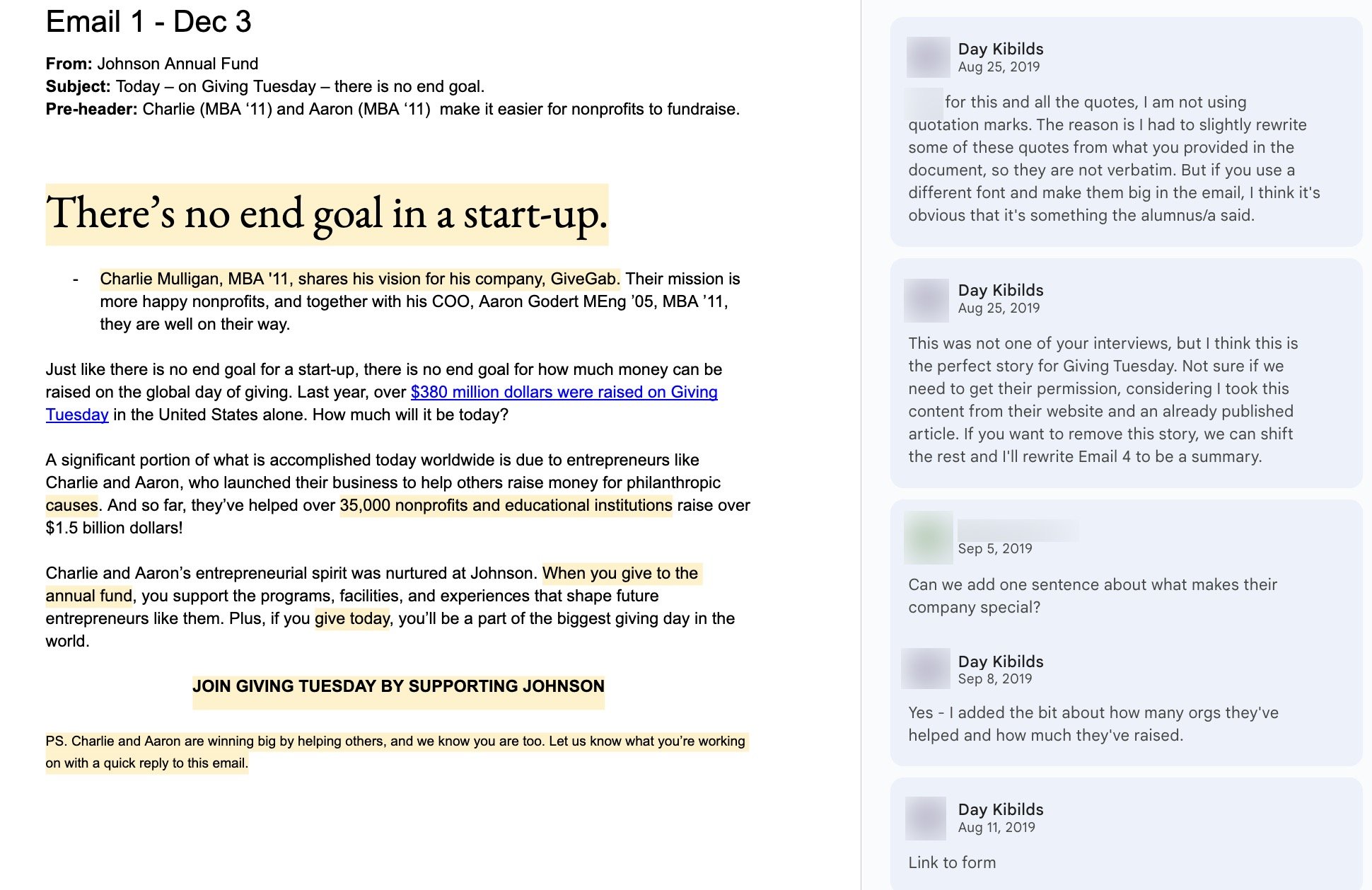
Screenshot of a fundraising email draft titled "Email 1 - Dec 3" for the Johnson Annual Fund, with a Giving Tuesday theme centered on alumni entrepreneurs Charlie Mulligan and Aaron Godert of GiveGab, alongside editorial comments from Day Kibilds discussing content sourcing, permissions, and revision notes.
4. Set a deadline and stick to it.
Say:
“If I don’t hear from you by X date, I’ll assume it’s good to go and keep moving. Let me know if you need more time.”
This works even with stakeholders who outrank you. Send them kind reminders. They’ll reply either way—with feedback or asking for an extension.
5. End with one meeting, not endless rounds.
When the deadline hits, bring all stakeholders together for 30 minutes.
I know we love to hate on meetings, but these 30 minutes will save you business days of back-and-forth.
In the meeting, go through and address the comments in real time. If you can make the changes on the spot, do so, or say how you plan to. If you need clarification, ask. If you want to push back, explain your rationale.
At the end of the 30 minutes, you’ll have a version as close to final as it gets.
This post was originally sent as an email. Subscribe to my newsletter and get the newest questions and answers in your inbox.